
GCSE science tuition cost UK
GCSE science tuition cost UK searches usually come from parents trying to work out whether private tutoring is worth the price, whether online tuition is cheaper, and what level of support their child actually needs. In the UK, GCSE Science tuition can vary widely, with private one-to-one tutors often charging around £20 to £70 per hour depending on experience, subject specialism and location. Some UK tutoring sources place typical GCSE or science tutoring around £25 to £50 per hour, while examiner or specialist support can cost more.
For parents, the better question is not simply “How much does GCSE Science tuition cost?” It is “What am I actually paying for, and will it help my child improve how they answer exam questions?”
Why GCSE Science tuition costs vary in the UK
GCSE Science tuition costs vary because not all tuition is the same. A university student helping with topic knowledge will usually charge less than a qualified teacher, experienced GCSE tutor or examiner. A tutor covering GCSE Biology, GCSE Chemistry and GCSE Physics may also charge differently from someone supporting only one science.
Prices are also affected by:
• whether tuition is one-to-one or group-based
• whether it is online or in-person
• whether the tutor covers AQA, Edexcel and OCR
• whether students get exam-question practice
• whether feedback is included
• whether the support includes required practicals, mock exam preparation and mark scheme training
Online tutors are often cheaper than in-person tutors because there is no travel time or venue cost. One 2026 tutoring cost guide suggests UK private tutors commonly charge £20 to £70 per hour, with GCSE tutors often around £20 to £40 per hour and online tutors typically cheaper than in-person tuition.
GCSE science tuition cost UK: what parents should expect
For GCSE Science, parents should expect three broad price categories.
Low-cost support may include free YouTube videos, revision websites, worksheets or independent practice. This can help motivated students, but it often lacks structure, accountability and feedback.
Mid-range support may include online group tuition, revision platforms or structured GCSE Science programmes. This can be better value when it includes video lessons, quizzes, past paper questions and exam technique.
Higher-cost support usually means private one-to-one tutoring. This can be useful when a student has very specific gaps, needs individual attention or has fallen significantly behind. The drawback is cost. Weekly private tuition across a full academic year can become expensive, especially if a child needs help across Biology, Chemistry and Physics.
Definition: GCSE science tuition cost UK refers to the amount parents can expect to pay for GCSE Science support in the UK, including private tutoring, online tuition, group lessons, revision platforms and structured support for GCSE Biology, Chemistry and Physics.
What good GCSE Science support should include
Good GCSE Science tuition should not just explain topics. Most students can watch a video on cells, rates of reaction or electricity for free. The real value comes from helping students turn knowledge into marks.
Strong GCSE Science support should include:
• clear teaching of GCSE Biology, Chemistry and Physics
• coverage of AQA, Edexcel or OCR specification content
• exam-style questions
• mark scheme practice
• required practical revision
• feedback on common mistakes
• support before mock exams and final GCSE exams
• structured revision so students know what to do each week
Parents should be cautious about paying only for explanation. Explanation matters, but GCSE marks are awarded for precise scientific wording, correct sequencing and answering the command word.
A classroom teacher would put it bluntly: knowing the topic is not the same as writing an answer that gets the marks.
Private tutor vs structured online GCSE Science tuition
Private one-to-one tutoring can work well when a student needs personal support, has a specific weakness or lacks confidence asking questions in class. The problem is that it can become expensive if used every week, especially throughout Year 10 and Year 11.
Structured online GCSE Science tuition can be better value for many families because it gives students repeatable access to lessons, quizzes, revision and exam practice. Instead of paying only for one hour of a tutor’s time, parents are paying for a system that students can use throughout the week.
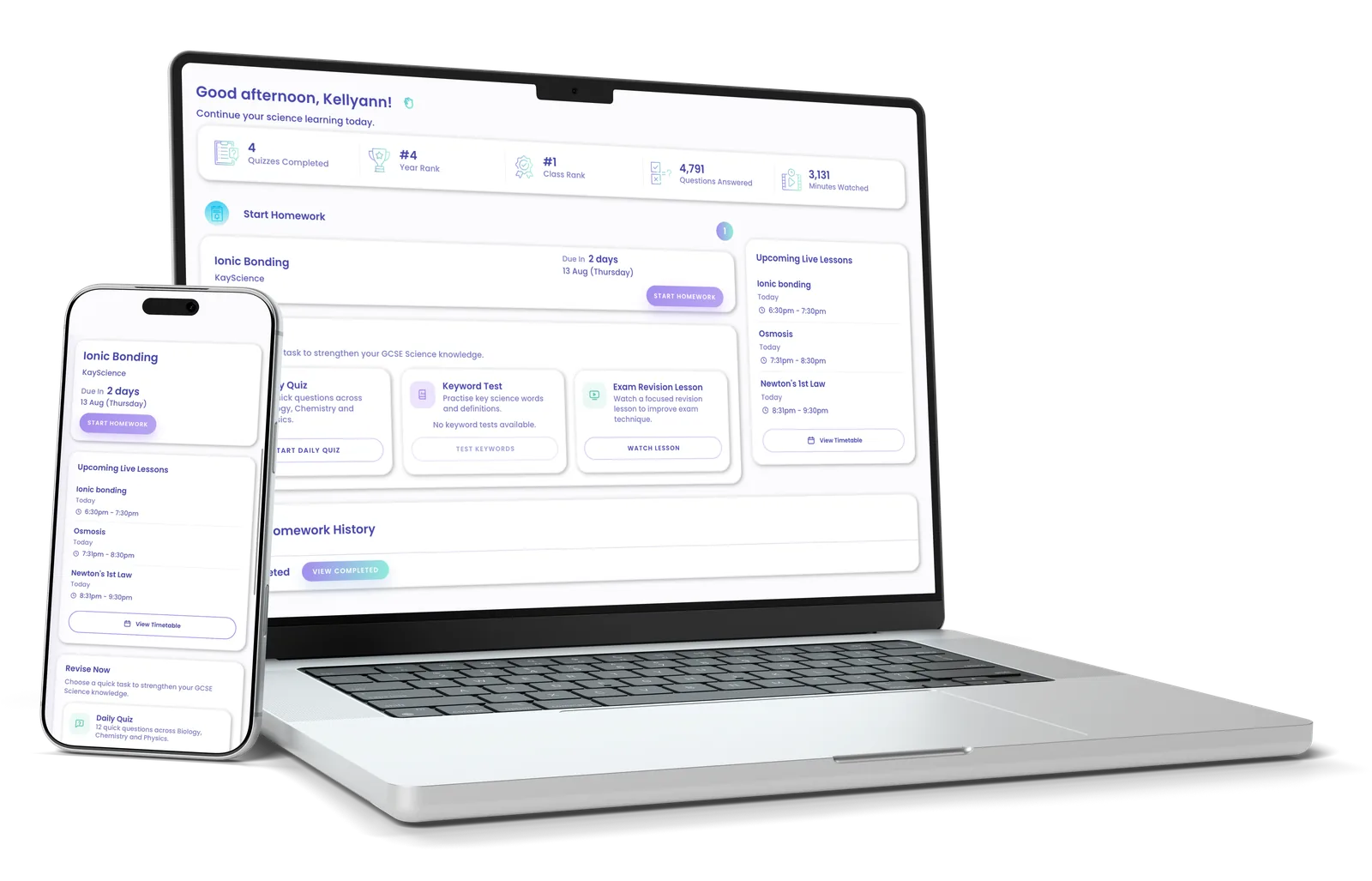
KayScience.com is designed to sit in this value gap. It gives students structured GCSE Science support across Biology, Chemistry and Physics, with videos, quizzes, exam-style practice and tuition support. It is more organised than random YouTube revision and more affordable than relying only on weekly private tutoring.
Private tutoring may be the right option for some students. But for many parents, the better first step is structured online support that builds consistency before adding expensive one-to-one tuition.
Is it worth paying when free YouTube videos exist?
Free YouTube videos can help students understand a topic. The issue is that most students do not know what to watch, when to watch it, how to practise afterwards or whether their answer would score marks.
This is where structured revision matters. GCSE Science students need to move from passive watching to active practice. They need to answer past paper questions, check mark schemes, correct mistakes and revisit weak topics.
For example, watching a video on rates of reaction is useful. But marks are won when the student can explain collision theory using the correct terms in the right order.
Example GCSE Science exam question
Example question:
Explain why increasing temperature increases the rate of reaction.
Model answer:
Increasing temperature gives particles more kinetic energy. This means they move faster and collide more frequently. A higher proportion of particles also have enough energy to overcome the activation energy, so there are more successful collisions per second.
Mark scheme phrase:
“More frequent successful collisions.”
Examiner insight:
Students do not gain marks simply for saying “the reaction is faster”. They gain marks by linking temperature to kinetic energy, collision frequency, activation energy and successful collisions. GCSE Science mark schemes reward precise scientific links, not vague understanding.
Common mistake students make
A common mistake is writing: “The particles move more, so the reaction speeds up.”
That answer shows some understanding, but it is usually too vague for full marks. It may miss key mark scheme ideas such as kinetic energy, frequency of collisions, activation energy and successful collisions.
This is why tuition cost should be judged by the quality of exam preparation, not just the number of hours taught. A cheaper option that only explains content may not be good value if the student still cannot answer exam questions properly.
How parents can decide what is worth paying for
Parents should think about the student’s starting point.
If your child understands most topics but loses marks in mock exams, they probably need exam technique, mark scheme practice and past paper training. If they have large topic gaps across Biology, Chemistry and Physics, they need structured teaching first. If they are inconsistent, they need a system that makes revision easier to follow each week.
Before paying for GCSE Science tuition, ask:
• Does it cover the correct exam board?
• Does it include Biology, Chemistry and Physics?
• Does it teach exam technique, not just content?
• Does it include past paper questions?
• Does it help with required practicals?
• Can my child use it consistently outside lesson time?
• Is the cost sustainable until mocks or final exams?
KayScience.com is built for parents who want a more structured route than independent revision, but do not want to rely only on expensive private tutoring. Students can use [GCSE Science Revision Hub], practise with [GCSE Science Exam Questions], and access [GCSE Science Tuition] support in one place.
Start with a free trial
The safest way to judge GCSE Science tuition cost is to test whether your child will actually use the support. A high hourly rate does not automatically mean better progress, and a free resource is not automatically good value if it leads to passive revision.
Progress depends on consistency, starting point, topic gaps, exam technique and how actively the student uses the support. For Year 11 students, especially before mocks or final exams, the priority should be structured revision and exam-question practice.
Parents can start with a free trial of KayScience.com to see whether the structure, lessons, quizzes and exam-style practice suit their child before committing. Use [KayScience Free Trial] to test whether the support is the right fit.
Start revising today
800+ video lessons, quizzes and exam questions for GCSE Science.
Start Your Free Trial